



Many WordPress website owners focus on design, speed, and SEO but overlook an important aspect of privacy compliance.
Because of the increased use of analytics tools, contact forms, and cookies, user data is collected without users’ knowledge.
At the same time, with the increased enforcement of the GDPR and the CCPA, there is an expectation that the website owner will be transparent regarding how their website collects or uses personal data.
Without proper policies and consent systems, websites can face compliance risks and lose user trust. In this guide, we’ll explore how to build a privacy compliant WordPress website.
We’ll cover the data your site may collect, the privacy laws that affect WordPress websites, the essential legal pages you need, and how to properly implement cookie consent.
What Is a WordPress Privacy Policy?
A privacy policy for your WordPress website serves as the foundation for building trust and transparency with your audience while ensuring compliance with applicable legal obligations.
The policy outlines how your website will collect, use, and store visitors’ personal information. As such, a well-written privacy policy provides valuable information to help users understand what information is collected through their use of your site and how that data may then be used.
A clearly written and comprehensive privacy policy will provide visitors with detailed information about those data collection processes and will help them better understand how their information may be used.
A WordPress privacy policy can include:
- The types of user data collected
- The methods used to collect that data (i.e., through forms, cookies, analytics, etc.)
- The reasons for collecting that data
- Any third-party services used in conjunction with your website
- The means by which user information is stored and protected
- Users’ rights regarding their personal data
A properly prepared privacy policy may also help your website comply with applicable data privacy regulations.
Does My WordPress Site Need a Privacy Policy?
Yes, in most cases, your WordPress site needs a privacy policy. If your website collects any form of personal information, such as names, email addresses, IP addresses, or cookies, you may be required to publish a privacy policy to comply with privacy regulations.
Below are some common reasons why WordPress websites should have a privacy policy.
1. Legal Requirements for WordPress Websites
- General Data Protection Regulation (GDPR): Requires a website that collects user data from people living within the European Economic Area (EEA) to provide comprehensive and transparent information about its data collection, processing, and storage practices.
- California Consumer Privacy Act (CCPA)/California Privacy Rights Act (CPRA): Caused California residents to have the right to view, delete, and/or opt-out of the sale of their own information.
- California Online Privacy Protection Act (CalOPPA): Requires any website that collects personal information from California residents to publish an accessible privacy policy.
Even if your website is not physically located in a country where these laws apply, if one of your website visitors is physically located in one of these jurisdictions, you must comply with these laws.
2. WordPress Platform Expectations
WordPress wants website owners to comply with any applicable privacy laws. A privacy policy helps ensure that your website clearly communicates how it will handle the personal information collected from users visiting your site.
3. Building Trust With Website Visitors
Internet users today are increasingly concerned about how their personal data is used. A clear privacy policy helps visitors understand your data practices and builds trust with your audience.
4. Reducing Legal and Compliance Risks
A privacy policy can help reduce legal risks by outlining how your website collects and uses personal information. Many websites also ask users to accept their privacy policy when submitting forms or creating accounts, which helps demonstrate consent.
5. Promoting Transparency and Responsible Data Use
Providing a privacy policy shows that your website values transparency and responsible data handling. Even if your website collects minimal information, clearly informing users about your practices is considered a best practice.
What To Include in Your WordPress Site’s Privacy Policy
A privacy policy for a WordPress site will state how you collect, use, and protect any data from your website visitors. Each site will, though, use different plugins and services, so the Privacy Policy should match your actual data usage.
Common areas that are usually covered are listed below:
1. Types of Personal Data Collected: You should state what types of data you collect from your site, such as names, email addresses, IP addresses, accounts, cookie data, and analytics data
2. Methods of Data Collection: You should state how the data is collected, such as through contact forms, newsletter signups, creating an account, comments, cookies, or tracking tools
3. Purpose of Data Collection: You should state the purpose of collecting this data, to respond to enquiries, improve the performance of the website, process payments, and/or send you updates.
4. Third-Party Services: You should disclose any third-party tools that you use to collect and analyze your data, such as Google Analytics, Mailchimp, or other email providers, payment processors, or advertising networks
5. Cookies or tracking technologies: You should provide information about the cookies you are using to collect data from site visitors and how they can manage or disable those cookies.
6. Data Security and User Rights: You will want to state how you secure the data that you are collecting and inform users of their rights in connection with it. Users have the right to access and delete their data.
Essential Legal Pages Required for WordPress Privacy Compliance
Most privacy laws require websites to publish specific legal pages that explain how user data is collected, used, and protected. These pages help maintain transparency and inform visitors about their rights.
Below are the key legal pages every privacy-compliant WordPress website should have.
1. Privacy Policy: The Privacy Policy outlines how your website collects, uses, and stores personally identifiable information (PII). Privacy policies generally define what data is being collected, why it is being collected, how it is used, which third-party service providers are involved in providing services to you or to customers of your website, and what rights users have.
2. Cookie Policy: The Cookie Policy outlines how your website utilizes cookies and other tracking technologies; this includes a description of the various types of cookies collected, the intended purpose of collecting these cookies, the cookie retention periods, and how users can set their cookie preferences.
3. Terms and Conditions: Terms and Conditions establish the guidelines for using your website, including acceptable usage, intellectual property rights, and limitations of liability.
4. Disclaimer: The disclaimer outlines your legal obligations regarding the content on your website, as well as limitations associated with that content, including any disclaimers pertaining to affiliate programmes or earning money from your website, or the need for you to seek professional advice.
Tools like the WPLP Compliance Platform help generate customizable legal pages based on your website’s data practices and applicable privacy laws.
How to Create a Privacy Policy for Your WordPress Website
Writing a privacy policy from scratch can be challenging because it must reflect your specific data practices.
The WPLP Compliance Platform allows WordPress users to generate legal policies by answering a few questions about their website. Based on the selected tools, services, and applicable privacy laws, the platform creates policies that can be customized before publishing.
This helps website owners ensure that their policies reflect the actual data processing activities happening on their site.
Create a Privacy Policy Using the WPLP Compliance Platform
You can easily create a privacy policy for your WordPress website using the WPLP Privacy Policy Generator. Follow these simple steps:
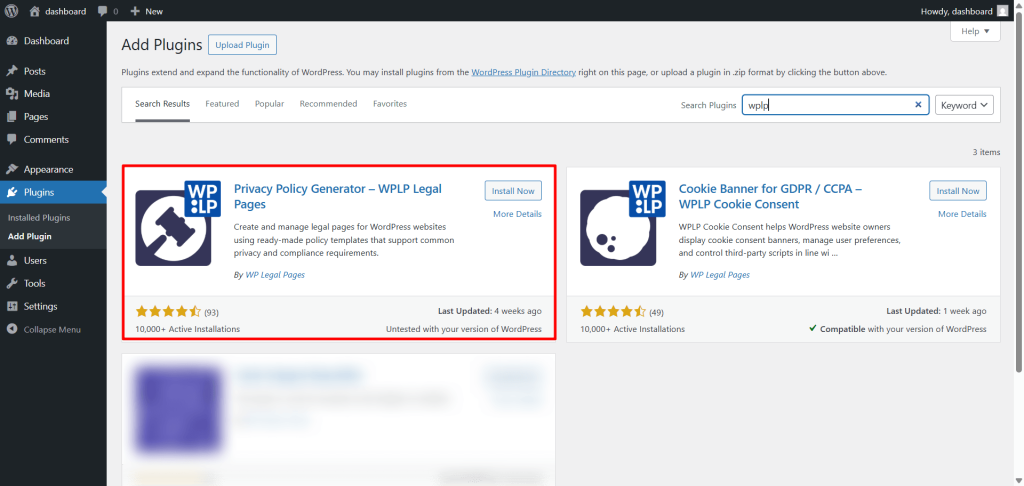
Step 1: Install and Activate the Plugin
Install the WPLP Compliance Platform plugin from your WordPress dashboard and activate it.
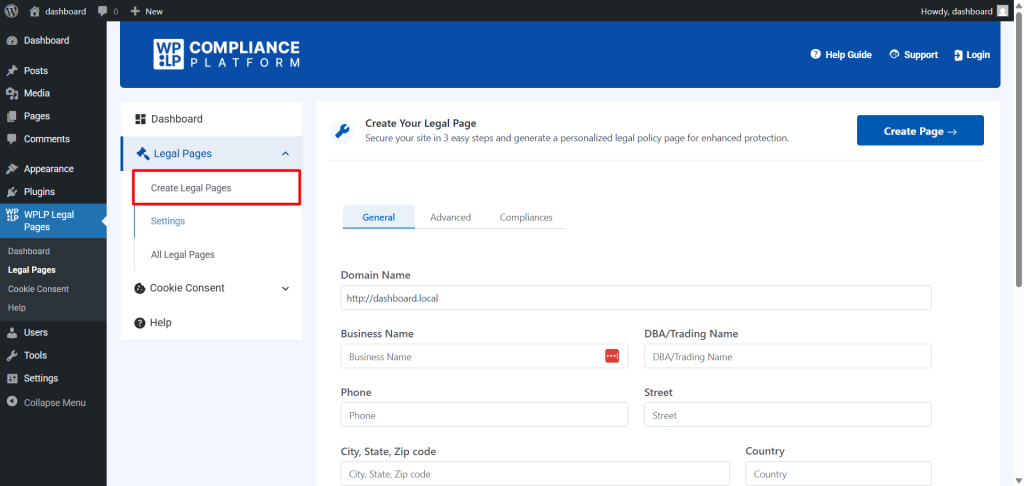
Step 2: Open the Privacy Policy Generator
Navigate to the privacy policy generator inside the plugin settings.
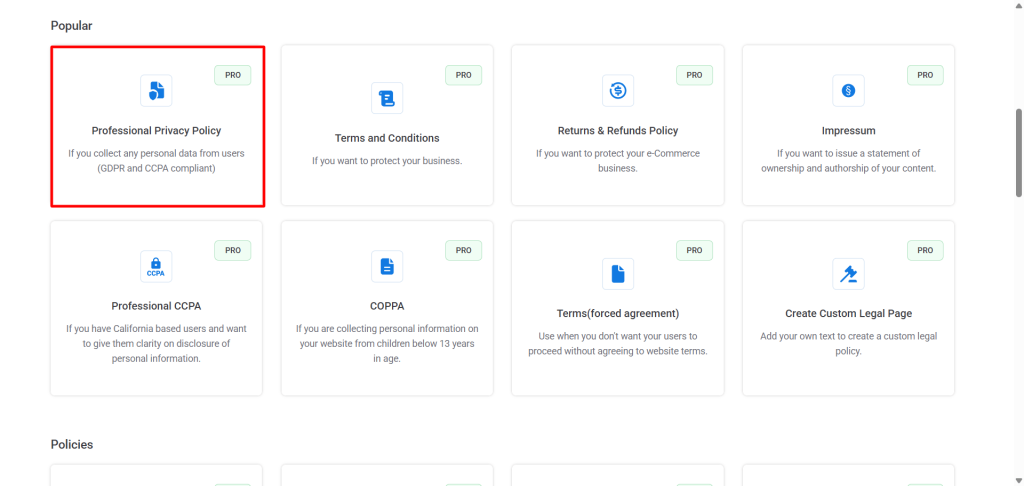
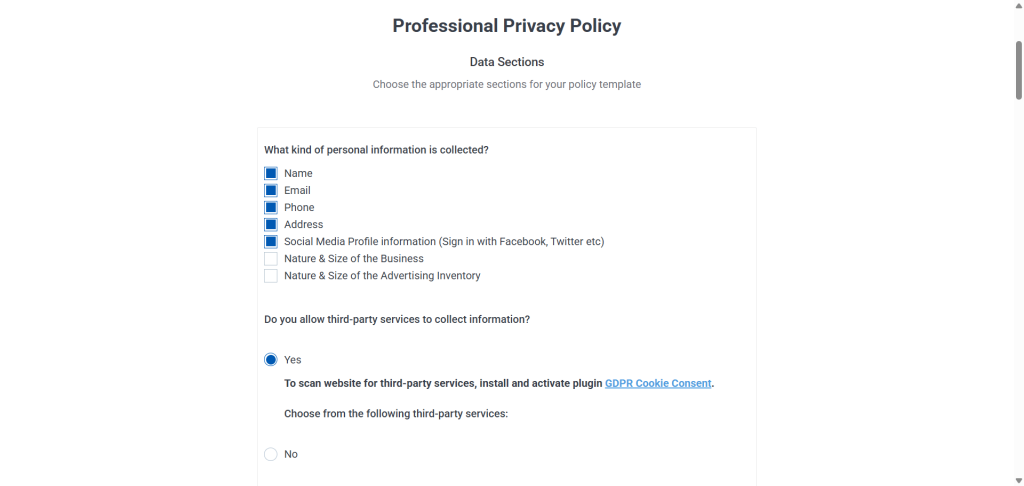
Step 3: Answer a Few Questions
Provide basic information about your website, such as the type of data you collect, the tools you use (analytics, contact forms, etc.), and the services integrated on your site.
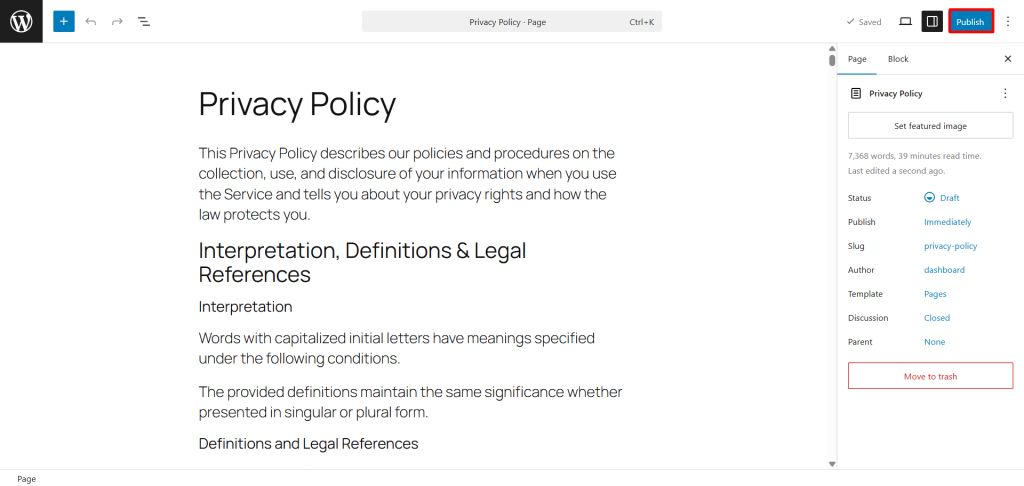
Step 4: Generate and Publish the Policy
Once you complete the setup, the plugin automatically generates a privacy policy tailored to your website. Review it and click Publish to add it to your site.
Setting Up a Cookie Banner
You can also configure a cookie consent banner using the platform.
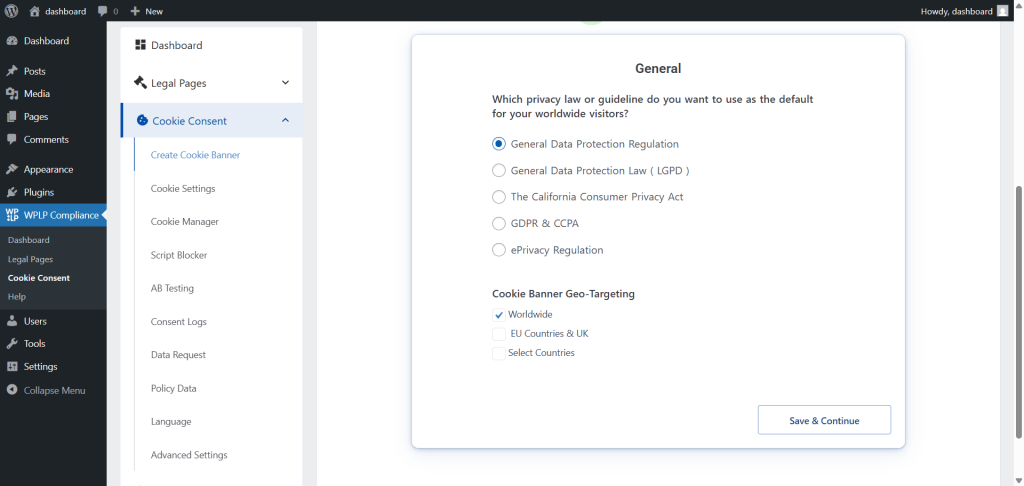
Step 1: Select the Geolocation and Privacy Laws
Choose the regions and privacy laws (such as GDPR or CCPA) you want the cookie banner to apply to.
Step 2: Publish the Cookie Banner
After configuring the settings, simply publish the banner to display it on your website.
Step 3: Use Advanced Compliance Features
Enhance compliance using features like consent logs, Google Consent Mode (GCM) support, and advanced consent management tools.
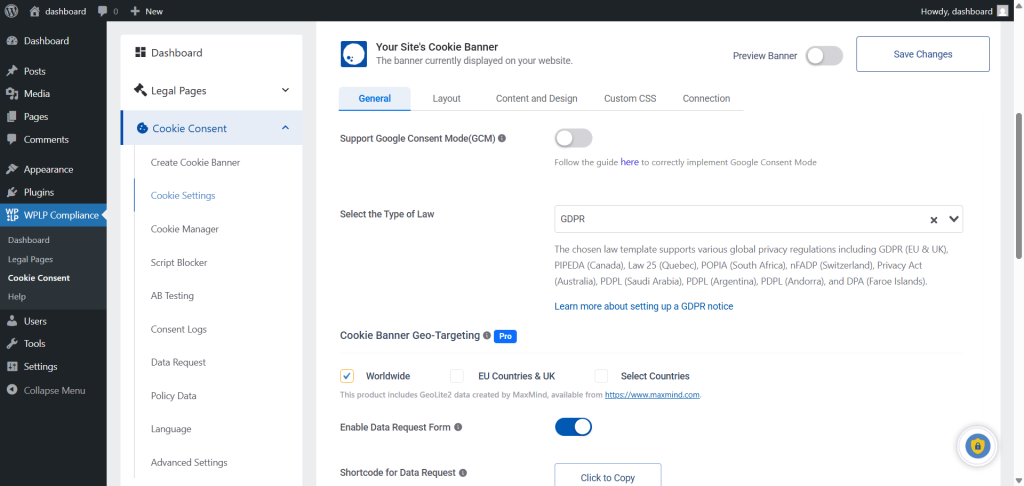
These tools help ensure your website remains transparent about data collection while making privacy compliance easier to manage.
Best Practices for Maintaining WordPress Privacy Compliance
Privacy compliance is not a one-time task. Websites must continuously monitor their data practices and update policies when necessary.
Here are some good practices for best practices:
1. Minimizing User Data: Reduce the amount of information collected from users to help minimize the possibility that you break privacy laws due to having collected too much information.
2. Plugin Review: Certain plugins collect user data, including tracking and cookies. Regular reviews of the plugins you have installed on your site will help ensure they are disclosed appropriately in your privacy policy.
3. Policy Review: Privacy laws are constantly changing and therefore require a regular review process to ensure your policies continue to meet the current privacy laws applicable to your organization in your region.
4. Keeping User Consent Records: Keeping records of users’ consent will allow you to show regulatory agencies that you are compliant with the privacy regulatory framework when required.
Conclusion
Building a privacy-compliant WordPress website is essential for protecting user data and maintaining trust with visitors. Privacy compliance can be a complicated process, and constantly changing laws and regulations only make things more complicated.
You can minimise compliance risks by knowing what personal data your website collects from users, having clear legal documents on your site, and implementing proper cookie consent processes.
WPLP Compliance Platform is a helpful tool that makes the compliance process easier by assisting with legal document generation, managing cookie consent, and storing consent records.
It is highly recommended that you make privacy compliance a priority to meet legal requirements and build trust and credibility for your website.

