

They didn’t hate your product. They just forgot you existed.
You got the sale. The order shipped on time. The customer didn’t complain. If anything, it felt like a smooth win. Then… nothing. No second order. No return visit. Just silence.
That’s the part that stings. When a customer ghost after buying once, they don’t leave a trail. No angry emails. No refund requests. They simply vanish—and you don’t notice the damage until repeat purchases slow down and acquisition costs start creeping up.
So why does this happen so often? Why do so many shoppers buy once and disappear, even when the product delivered?
Here’s the truth: it’s usually not about the product. It’s about what happens (or doesn’t happen) after the first purchase.
6 Real Reasons Customers Ghost After the First Purchase
Most customers don’t leave because something went wrong. They leave because nothing pulled them back. That’s why you’ll often see a customer ghost after buying once—not out of anger, but out of indifference.
Here’s what’s really happening behind the scenes when shoppers buy once and disappear.
1. You Trained Them to Be Transactional
Ads → discount → checkout → silence
Think about how most ecommerce sales happen today. A customer sees an ad, clicks because of an offer, uses a coupon, checks out, and that’s it. The relationship ends the moment the payment goes through.
There’s no story. No follow-up. No reason to think beyond the deal.
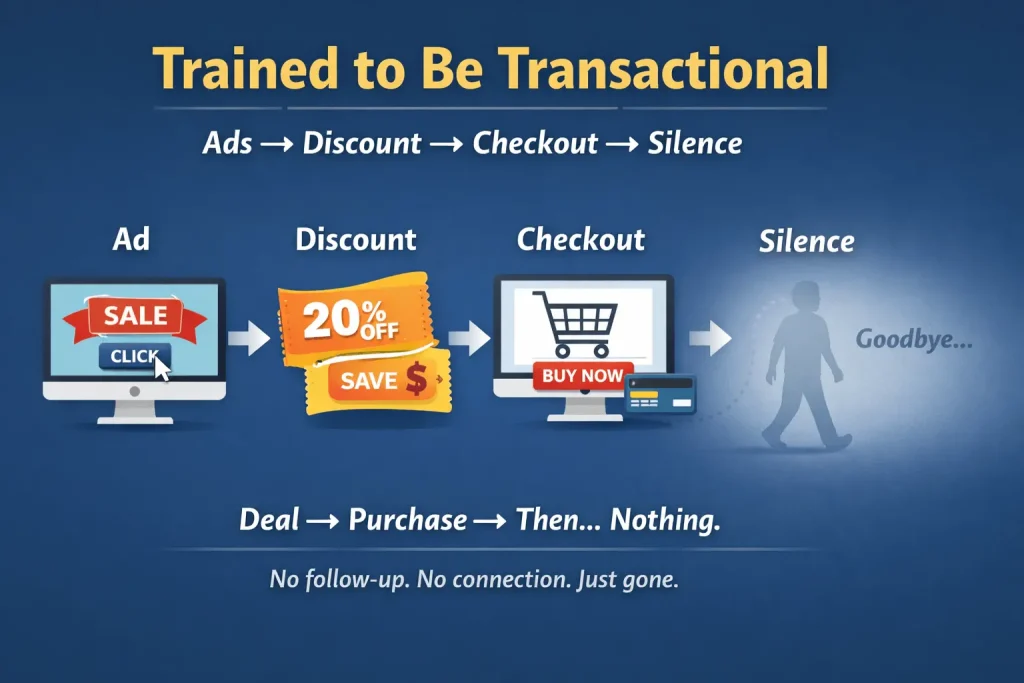
When customers first meet your brand through discounts, they learn one simple rule: buy when it’s cheap. So once the deal is over, so is the connection. And that’s exactly how a customer ghosts after buying once—because they never felt like they were starting a relationship with a brand. They were just completing a transaction.
If your store is built around “buy now” moments but has nothing that keeps people engaged after the first order, you’ll keep seeing customers buy once and vanish, no matter how good the product is.
Turn one-time buyers into repeat customers – start building loyalty with WPLoyalty today.
2. Your Store Has Zero Post-Purchase Experience
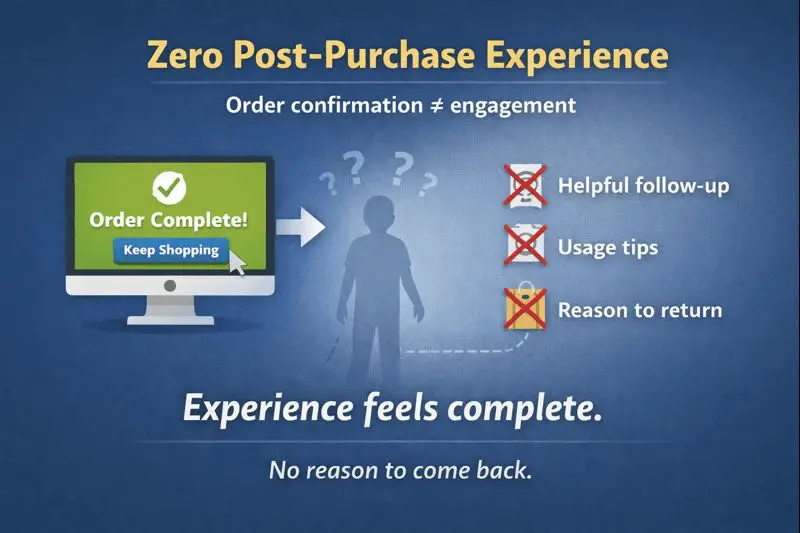
Order confirmation ≠ engagement
Most stores treat the order confirmation page like the finish line. But honestly, it should be the starting point. Because once the product is delivered, many brands go completely silent—and that’s exactly when a customer ghost after buying once.
After the product is delivered, nothing happens:
- No helpful follow-ups
- No product usage tips
- No reason to return to the store
From the customer’s perspective, the experience feels complete. And when an experience feels complete, there’s no motivation to come back. This gap in post-purchase engagement is a major contributor to low repeat purchase rates in ecommerce.
3. No Reward for Staying Loyal
Same price for first-timer and repeat buyer
Here’s a quiet frustration many customers feel but never say out loud: “Why should I come back?”
When a repeat customer pays the exact same price as someone buying for the first time, loyalty goes unnoticed. There’s no extra value for sticking with you, so choosing your store again feels no different than trying a new brand.
Dozens of alternatives competing for attention every day, it becomes easy for a customer ghost after buying once-not because they’re upset, but because there’s nothing pulling them back.
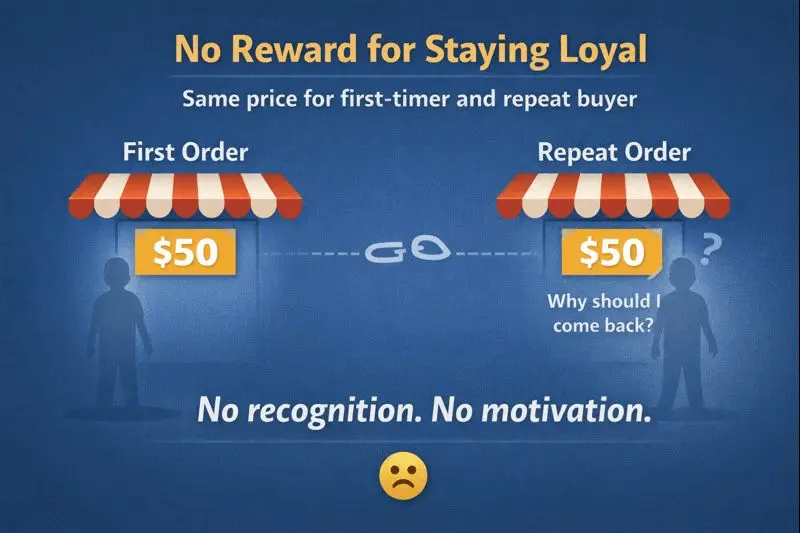
Customers don’t expect special treatment—but they do notice when loyalty is ignored. Over time, that lack of recognition leads to customer ghosting after purchase, even if they liked the product.
When loyalty goes unrecognized, customers start expecting more personal value — which is why personalized loyalty rewards matter more than ever.
4. Customers Forget Faster Than You Think
New brands every day. New offers every hour.
Ecommerce is noisy. Your customers are constantly exposed to:
- New ads
- New products
- New brands promising better deals
If you’re not visible, you’re forgettable. And forgettable brands don’t get repeat purchases.
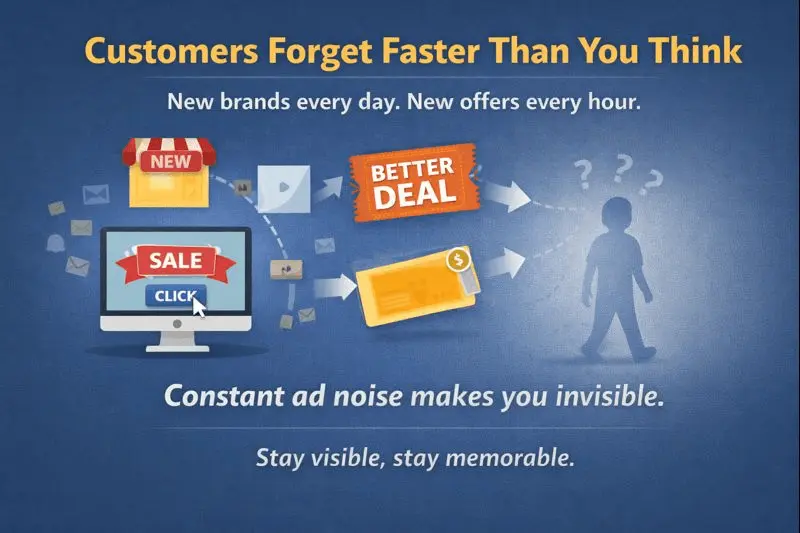
This isn’t personal. It’s just how attention works online. Without reminders, follow-ups, or ongoing engagement, customers stop thinking about you—fast.
If staying visible feels harder than ever, learning how to reward loyal customers can give people a real reason to remember—and return.
5. No Emotional or Personal Trigger
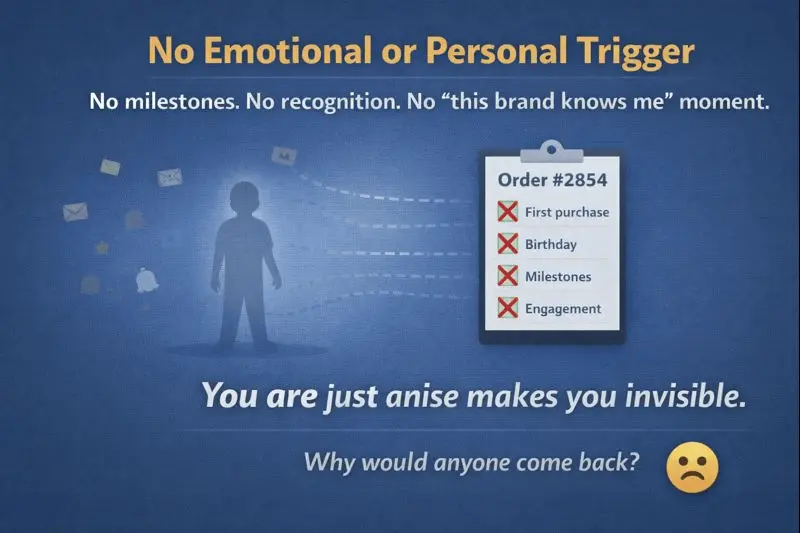
Most stores treat customers like order numbers. Customers feel that.
There’s no acknowledgment of:
- Their first purchase
- Their birthday
- Their milestones
- Their engagement
Without emotional touchpoints, there’s no attachment. And without attachment, there’s no reason to return. Customers are far more likely to stay loyal to brands that recognize them as individuals, not just transactions.
6. Nothing Pulls Them Back
No points. No referrals. No reason to return organically.
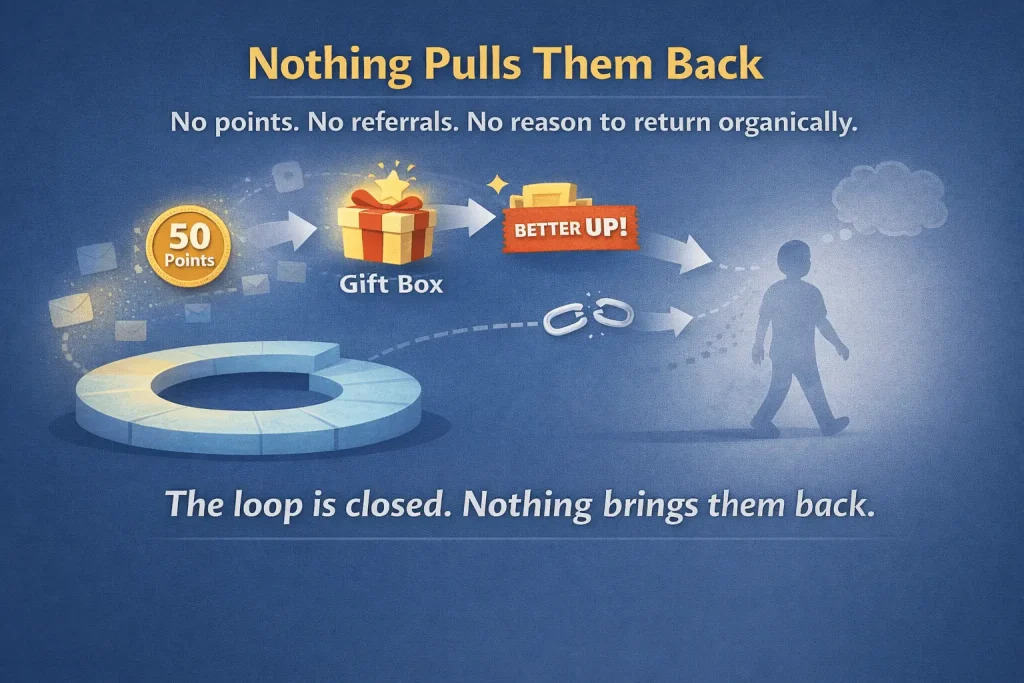
The final and most overlooked reason customers ghost after buying once: there’s nothing pulling them back.
- No points to earn.
- No rewards waiting.
- No progress to continue.
Once the purchase is complete, the loop is closed. And closed loops don’t create repeat customers.
Stores that build retention systems—where customers feel like they’re progressing toward something—naturally see higher customer lifetime value. Those that don’t rely on ads and discounts to bring people back, again and again.
What Actually Makes Customers Come Back
Retention isn’t about begging customers to return or chasing them with endless discounts. It’s about giving them clear, meaningful reasons to come back on their own.
Customers return when they feel recognized—when their purchase history, loyalty, or milestones don’t go unnoticed. They come back when there’s a sense of progress, where every order feels like it’s moving them toward something, not starting from zero again.
Rewards matter too, but not in the “another coupon” way. Real rewards feel earned, not forced. And finally, there’s belonging—the feeling that they’re part of something, not just another checkout.
That’s where loyalty systems change the game. They create continuity after the first purchase, turning a single transaction into an ongoing relationship customers actually want to continue.
How WPLoyalty Helps Stop Customer Ghosting (In Real Stores)
Customer ghosting doesn’t happen overnight. It happens when there’s no reason to come back after the first order. This is exactly where WPLoyalty fits in—not as a discount engine, but as a system that keeps customers engaged after they buy.
Here’s how it works in practice, using four core features that directly tackle the reasons customers disappear.
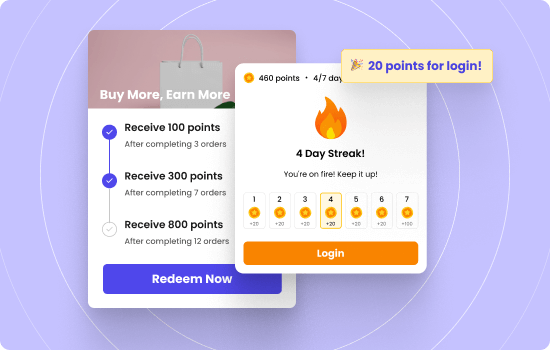
1. Points for Purchase: Give Customers a Reason to Return
Most stores treat every order as a one-off event. WPLoyalty turns each purchase into progress.
With Points for Purchase, customers earn points every time they buy.
For example:
- Spend $100 → earn 10 points
Now the first purchase isn’t the end—it’s the beginning. Customers know that their next order brings them closer to a reward. That alone creates a natural reason to come back, without sending another discount email.
2. Reward Based on Spending: Increase AOV Without Pushing Discounts
Instead of forcing upsells or flash sales, It lets you reward spending milestones.
Example:
- Spend $100 → get 100 points or a $10 reward
This subtly nudges customers to add one more product to their cart—not because they’re being pressured, but because they’re almost there. It’s a simple way to increase average order value while making customers feel rewarded, not sold to.
A loyalty rewards system nudges customers to spend a little more by rewarding progress instead of pushing discounts.
3. Referral Campaigns: Turn Buyers into Brand Advocates
Customers are far less likely to ghost when they’re emotionally invested.
With Referral campaigns, customers earn rewards when their friends make a purchase. This shifts the relationship from “buyer” to “advocate.” Once someone refers to a friend, they’re no longer passive—they’re connected to your brand’s success.
Real-world result: referred customers often return just to check referral rewards or track progress, pulling them back organically.
4. Achievements: Turn Buying into a Habit
Achievements introduce progress and recognition—two things most ecommerce stores completely miss.
You can reward:
- Moving up a loyalty level
- Daily sign-ins
- Engagement milestones
This creates a sense of momentum. Customers don’t feel like they’re starting over with each order. They feel like they’re building toward something.
The Bigger Picture
WPLoyalty doesn’t try to win customers back after they’ve already disappeared. It helps prevent the moment a customer ghost after buying once by giving them real reasons to stick around—progress they can see, rewards they’re working toward, and a relationship that continues beyond checkout.
When customers feel like they’re building toward something, they’re far less likely to buy once and vanish. That’s how repeat purchases start happening naturally, without constantly relying on ads or discounts.
Built for WooCommerce Stores That Want Repeat Customers
- WooCommerce-native — works seamlessly with your existing store, no external tools needed
- No SaaS lock-in — your data, your store, fully under your control
- No developer dependency — easy to set up and manage without technical help
- Runs quietly in the background — rewards customers automatically after every purchase
- Designed for repeat purchases — focused on long-term retention, not short-term campaigns
Simple to run. Easy to scale. Built to turn one-time buyers into returning customers.
Stop losing one-time buyers — build customer loyalty with WPLoyalty.
Final Takeaway
Customers don’t ghost brands that give them a reason to stay.
When brands stop treating purchases as one-time wins and start building ongoing relationships, repeat sales follow naturally. Recognition, progress, and rewards turn forgettable transactions into habits. Give customers a reason to stay, and ghosting stops being a mystery.
Related Reads,

