

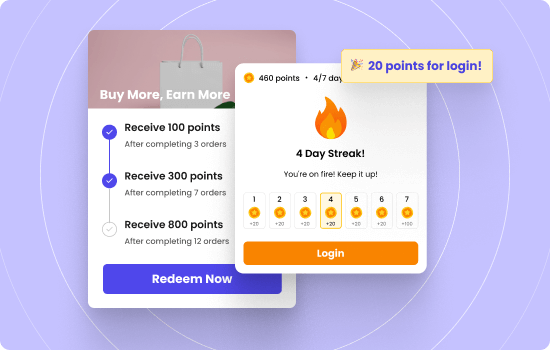

An omnichannel loyalty program connects how customers shop, earn, and return. It follows them across phones, stores, websites, and apps, without breaking the experience. Every interaction adds to the same loyalty journey.
Customers no longer shop in straight lines. They browse on phones, visit stores, compare prices online, and expect rewards to follow them everywhere.
When loyalty points or rewards disappear or work only in one channel, trust breaks. An omnichannel loyalty program fixes this by keeping loyalty consistent, accurate, and easy to use.
This blog explains how omnichannel loyalty programs work, why they matter, and how you can build one that scales with your business.
What Is an Omnichannel Loyalty Program
An omnichannel loyalty program is a single loyalty system that allows customers to earn and redeem rewards at all touchpoints – online, in store, and on mobile without confusion. It tracks points, rewards, tier levels, and activity in one shared profile that updates instantly.
Every action a customer takes connects back to the same loyalty balance in real time. A purchase in a physical store appears instantly on the online account. A reward redeemed through a mobile app reflects immediately at checkout everywhere. This consistency defines a true omnichannel loyalty program.
Modern customers do not separate channels in their minds. A large study shows that 7 out of 10 retail shoppers use multiple channels in their shopping journey, proving that omnichannel behavior is now the norm.
Bryan Pearson, a recognized loyalty expert and author of The Loyalty Leap, says loyalty programs must move beyond single channels and unify customer interactions to build lasting relationships.
How an Omnichannel Loyalty Program Works
- A single loyalty system stores customer points, rewards, and tier status in one place.
- Every channel connects to this system, including online stores, physical locations, and mobile apps.
- When a customer makes a purchase, the loyalty balance updates instantly across all platforms.
- Customers can earn rewards in one channel and redeem them in another without delays.
- Staff and digital systems always see the same loyalty information in real time.
This structure keeps the experience consistent and prevents missing points or broken rewards.
Why Omnichannel Loyalty Programs Are Important?
An omnichannel loyalty program matters because customer behavior has changed and outdated loyalty systems no longer meet real expectations. Modern consumers interact with brands across multiple channels and expect their loyalty to follow them seamlessly.
Here’s exactly why it matters:
- Around 80% of consumers use multiple channels to complete a purchase, showing that customers rarely stay in one channel and expect seamless experiences.
- Consistent tracking reduces customer abandonment. When point balances sync instantly, customers stay engaged and remain confident in your program.
- Real time rewards increase purchase frequency. Customers who see immediate point updates are more likely to come back within 30 days.
- Unified data provides a true customer profile across every interaction, powering deeper personalization and stronger retention.
- Seamless rewards raise customer lifetime value because customers spend more when their loyalty feels recognized across touchpoints.
- Brands with omnichannel loyalty reduce gaps in service when customers switch channels, which lowers churn rate and improves repeat purchase metrics.
- Integrated loyalty improves cross-sell and upsell by showing relevant rewards on the channel the customer is currently using.
Omnichannel loyalty programs matter today because they match how real people shop, eliminate friction, and strengthen customer trust and long-term engagement.
Omnichannel Loyalty Program vs Multichannel Loyalty
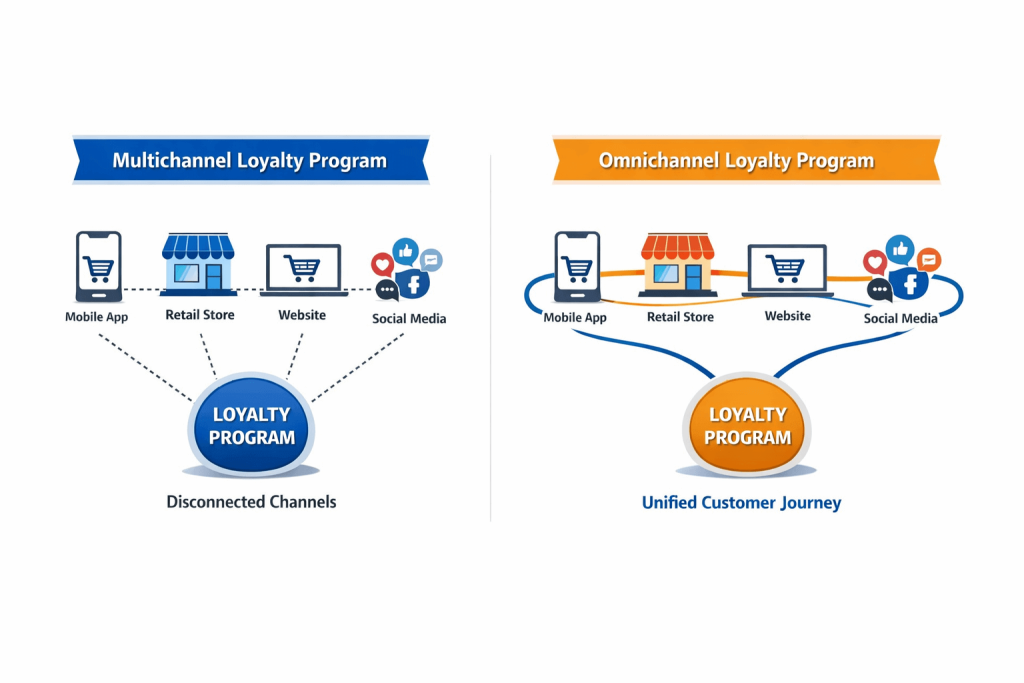
You can run loyalty in many channels and still frustrate customers. The difference comes down to integration. Omnichannel connects the experience into one journey, while multichannel keeps channels running side by side.
Key differences at a glance
| Aspect | Multichannel Loyalty Program | Omnichannel Loyalty Program |
| Customer experience | Separate experiences in each channel | One connected experience across all channels |
| Customer profile | Multiple customer profiles may exist | Single unified customer profile |
| Points and rewards | Points often work only in one channel | Points can be earned and redeemed anywhere |
| Loyalty balance | Balances may differ by channel | Same balance visible in real time everywhere |
| Personalization | Channel based offers only | Journey based personalization across touchpoints |
| Data structure | Siloed data across systems | Unified customer data in one system |
| Operational effort | Manual fixes and reconciliations | Centralized rules and automation |
| Staff experience | Staff see partial loyalty data | Staff see full loyalty context instantly |
| Customer trust | Breaks when rewards do not sync | Grows due to consistent recognition |
| Fit for modern shoppers | Poor fit for mixed shopping journeys | Strong match because 73% of retail shoppers use multiple channels |
Key Components of a Successful Omnichannel Loyalty Program
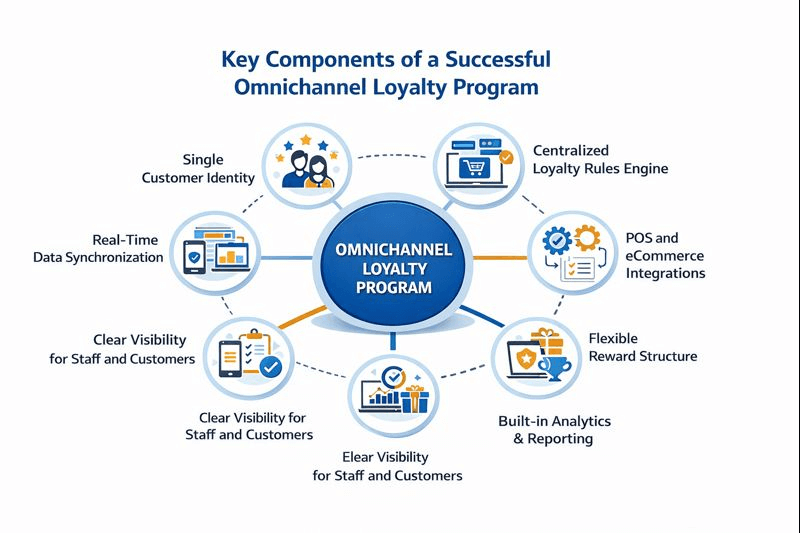
Let us see what must exist for an omnichannel loyalty program to actually work in real conditions, not in theory.
- Single customer identity across channels
Every customer needs one profile that connects email, phone number, in store ID, and online account. Without this, points split and loyalty breaks. - Real time data synchronization
Points, rewards, and tier status must update instantly across all systems. Delays cause mistrust and abandoned loyalty usage. - Centralized loyalty rules engine
Earning logic, redemption rules, expiration dates, and tier movement must live in one place. This prevents channel specific behavior. - POS and ecommerce integrations
In store and online systems must talk to the loyalty engine directly. Manual uploads or batch syncing creates errors. - Flexible reward structure
The program must support points, tiers, experiential rewards, and non purchase actions without rebuilding the system. - Clear visibility for staff and customers
Both employees and customers must see the same loyalty information at the same time. Visibility prevents disputes and confusion. - Built in analytics and reporting
You need clear data on earning, redemption, breakage, and engagement to control customer acquisition costs and improve performance.
These components turn omnichannel loyalty from a concept into a reliable system.
Types of Omnichannel Loyalty Programs
Different types of omnichannel loyalty programs are:
- Points-based program (earn/redeem points)
- Tiered-based program (loyalty tiers)
- Subscription-based program (paid benefits)
- Experience-driven program (brand experiences)
- Local retail program (store loyalty)
Some brands also participate in coalition loyalty programs, where multiple partners share a common rewards system across different brands and categories.
Below are real examples showing how each type works in practice.
1. Points-based Omnichannel Loyalty – Starbucks Rewards
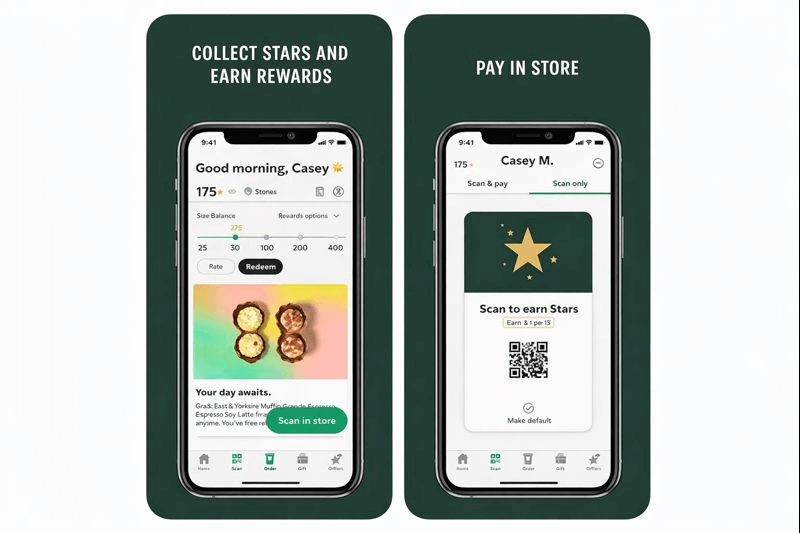
Example: Starbucks Rewards links the mobile app, in-store purchases, and online ordering into one loyalty system. Customers earn “Stars” for every purchase anywhere, then redeem them for free drinks and food.
Why it’s omnichannel: Points earned online reflect instantly in store and vice versa. Offers and personalized rewards appear in the app, email, and at the register.
More info: Read on the detailed case study on Starbucks loyalty program case study
2. Tiered Omnichannel Loyalty – Sephora Beauty Insider
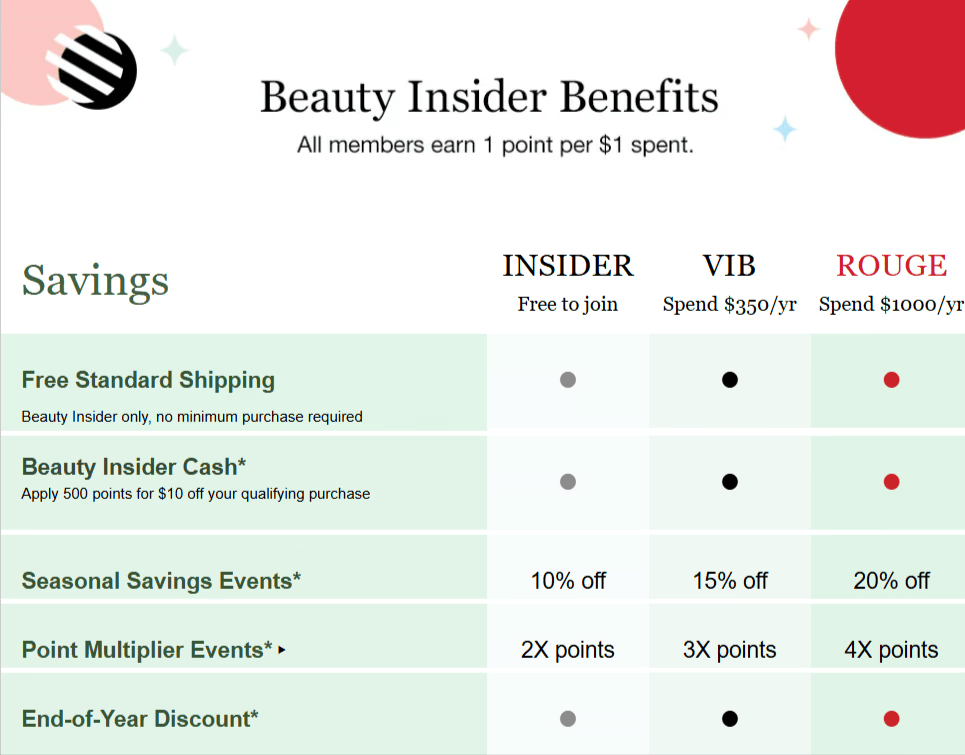
Example: Sephora’s Beauty Insider program uses tiered loyalty program – Insider, VIB, Rouge – that escalate to better rewards at higher levels. Members earn points from purchases in store or online, then redeem them for exclusive products, early access, and experiences.
Why it’s omnichannel: Tier progress, points, and rewards display consistently in the website, app, and in-store systems.
More info: Read on the detailed case study on Sephora loyalty program case study
3. Subscription-based Omnichannel Loyalty – Amazon Prime
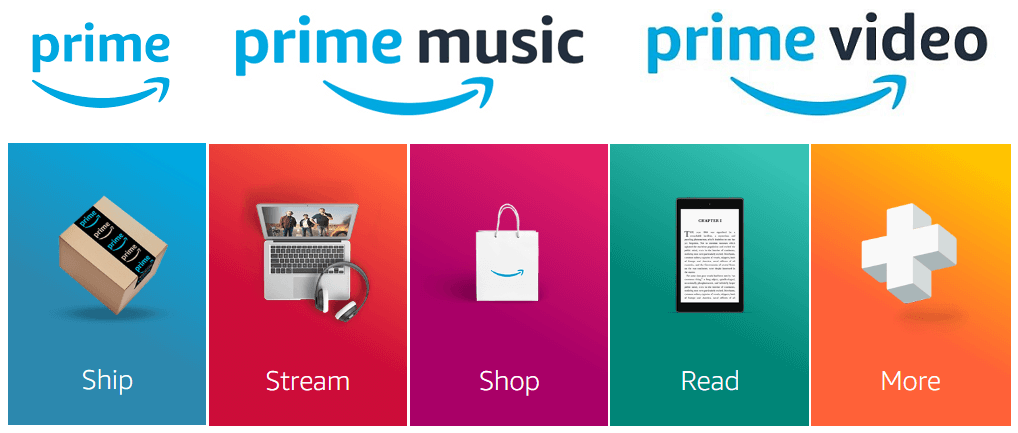
Example: Amazon Prime is a subscription loyalty model that links free shipping, exclusive deals, and digital benefits across platforms. Members enjoy consistent perks whether shopping on desktop, mobile, or in partner experiences.
Why it’s omnichannel: The membership applies to every purchase method and across devices without separate reward counters.
4. Experience-driven Omnichannel Loyalty – The North Face XPLR Pass

Example: The North Face’s XPLR Pass mixes purchases with activities and experiences. Members earn points not just for buying gear but also for interacting with the brand community and events.
Why it’s omnichannel: Points and rewards appear across the brand’s web, mobile, and physical event platforms.
5. Local Retail Omnichannel Loyalty – Mizzen+Main (Shopify Case)
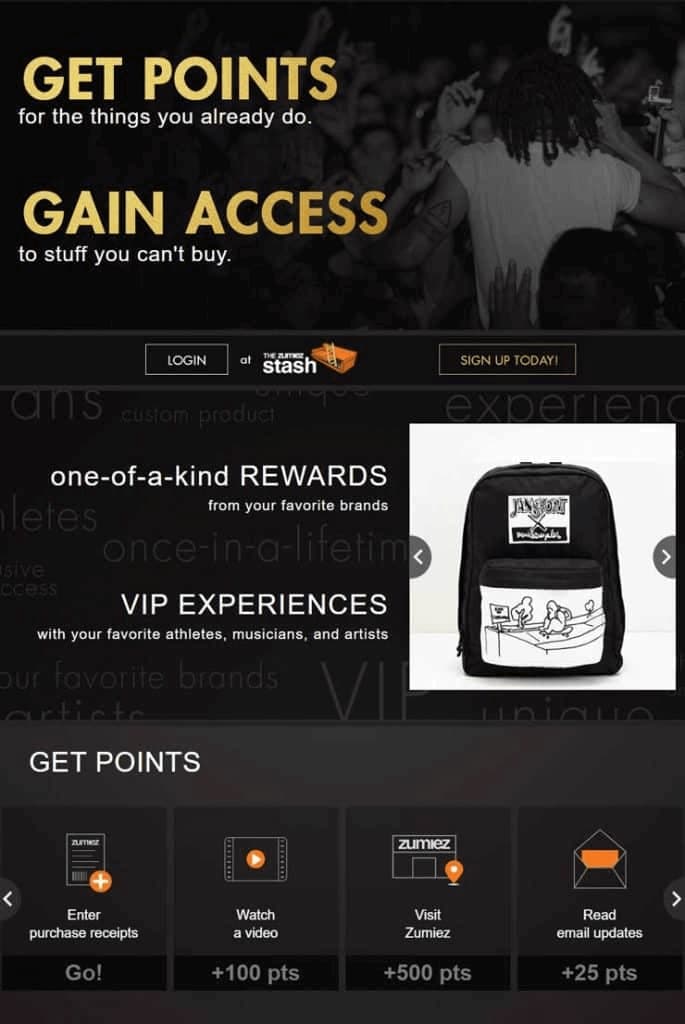
Example: Mizzen+Main uses unified POS and ecommerce data so retail staff see online points and apply rewards instantly in store. This eliminates siloed systems and speeds service.
Why it’s omnichannel: Online and in-store loyalty views are the same, reducing errors and boosting reward usage.
Omnichannel Loyalty Rewards Beyond Purchases
Brands use omnichannel loyalty programs to reward loyal customers for actions like referrals, reviews, app usage, and in store visits, not just purchases. Rewarding these actions increases loyalty without cutting margins.
- Account creation rewards encourage customers to identify themselves early, which improves data quality across channels.
- Offer birthday rewards to create a personal moment that encourages customers to return without relying on discounts.
- App installs and logins increase mobile engagement and give brands a direct communication channel.
- Product reviews reward customers for feedback that improves conversion and trust.
- Referrals turn loyal customers into acquisition and retention channels while keeping rewards performance based.
- In store visits and check-ins recognize physical engagement even when no purchase happens.
- Social engagement actions reward follows, shares, or campaign participation across platforms.
- Event attendance and community actions build emotional loyalty by rewarding involvement, not transactions.
- Sustainability actions such as recycling or reuse rewards align loyalty with brand values.
These non purchase rewards keep customers active between buying cycles and strengthen long term loyalty without relying only on discounts.
How to Build an Omnichannel Loyalty Program Step by Step
Step 1 – Define the goal and the budget guardrails
- Choose one primary goal such as repeat purchase rate or customer lifetime value
- Set a clear reward cost limit tied to margins
- Define the loyalty promise customers should feel
Step 2 – Map your real customer journeys
- List online browsing, in store purchase, returns, and support interactions
- Include buy online pick up in store and mobile app usage
- Mark where loyalty must appear like checkout and refunds
Step 3 – Fix customer identity before anything else
- Select a single identifier such as email plus phone number
- Prevent duplicate accounts across channels
- Train store staff to capture identity without slowing checkout
Step 4 – Choose your loyalty model and keep it simple
- Start with one model before adding complexity
- Use points based loyalty for earn and redeem simplicity
- Use tiered loyalty for status driven engagement
Step 5 – Design earning rules that match your margins
- Reward purchases at a sustainable rate
- Add non purchase actions like reviews and referrals
- Avoid bonus rules that give away value too fast
Step 6 – Design redemption rules that work everywhere
- Allow redemption online and in store with one balance
- Define clear limits for stacking and minimum spend
- Make redemption instant and predictable
Step 7 – Connect channels with real time data flow
- Integrate ecommerce, POS, mobile app, and CRM
- Sync points and redemptions instantly
- Avoid batch syncing that causes missing points
Step – 8 Build the operational layer most brands forget
- Create simple staff scripts for enrollment and redemption
- Provide a short loyalty cheat sheet for employees
- Add support macros for common loyalty issues
Step 9 – Add controls for fraud and loyalty abuse
- Limit referral rewards , review rewards, and bonus events
- Verify sign ups and referrals
- Monitor unusual earning and redemption patterns
Step 10 – Launch in phases and test edge cases
- Start with a limited store or region
- Test refunds, exchanges, gift cards, and exclusive discounts
- Fix exceptions before full rollout
Step 11 – Promote the program where customers act
- Add sign up prompts at checkout and POS
- Use receipts, customized email, and SMS for education
- Show progress toward the next reward
Common Mistakes Businesses Make With Omnichannel Loyalty
Many omnichannel loyalty programs fail not because the idea is wrong, but because execution breaks at critical points.
Many of these issues come from weak loyalty program management, where teams launch rewards but fail to monitor performance, rules, and customer behavior over time.
- Launching loyalty before fixing customer identity
When customers end up with multiple profiles, points split across accounts. This creates missing rewards and support complaints that damage trust fast. - Treating omnichannel as a frontend feature
Some brands focus only on apps and emails while backend systems stay disconnected. Loyalty breaks the moment a customer switches channels. - Using batch syncing instead of real time updates
Delayed point updates confuse customers and reduce engagement. Real loyalty only works when balances update instantly. - Overcomplicating earning and redemption rules
Too many conditions slow adoption. Customers stop using loyalty when they need explanations to redeem rewards. - Ignoring returns, refunds, and exchanges
Loyalty often breaks during edge cases. If returns do not adjust points correctly, customers notice immediately.
Final Thoughts
An omnichannel loyalty program works when it reflects how customers actually shop. People move between stores, websites, and mobile apps without thinking about channels. Loyalty must follow them with the same ease.
Strong programs focus on consistency, not complexity. One customer profile, real time updates, and clear rewards build trust faster than discounts ever will. When customers know their loyalty always counts, they return more often and stay longer.
Also read:
- eCommerce Loyalty Programs: Why You Should Consider Using it? (Examples+Ideas)
- 5 Best WooCommerce Referral Plugins (2025)
- Fashion Loyalty Programs: Types, Examples & Actionable Tips (2025)
- 7 Best Referral Marketing Strategies
- Everything You Need to Know About Customer Loyalty Programs in 2025
- 5 Best Referral Plugins for WordPress in 2025
- 6 Types of Loyalty Programs & Pick the Best for Your Brand
- 7 Best Ecommerce Customer Acquisition Strategies (+Examples)

